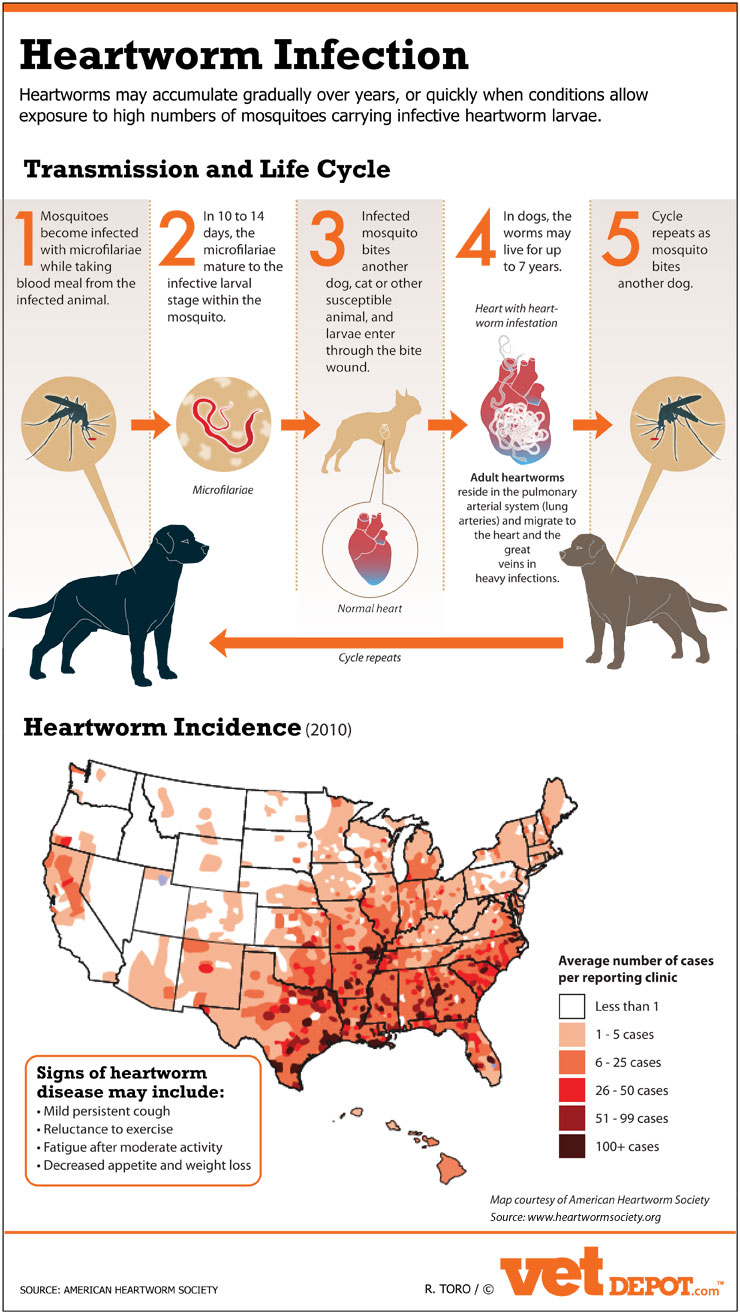
If you live in an area that has a risk of heartworm disease you’ll want to follow these guidelines to treat and prevent heartworms naturally to keep your dog heartworm free: Caused by a parasitic worm, heartworm disease gets transferred to dogs by infected mosquitoes and impacts thousands of dogs each year.

Heartworm in Dogs, Part 2 Prevalence • Long Beach Post
Your veterinarian will determine the specific injection schedule according to your dog's condition.
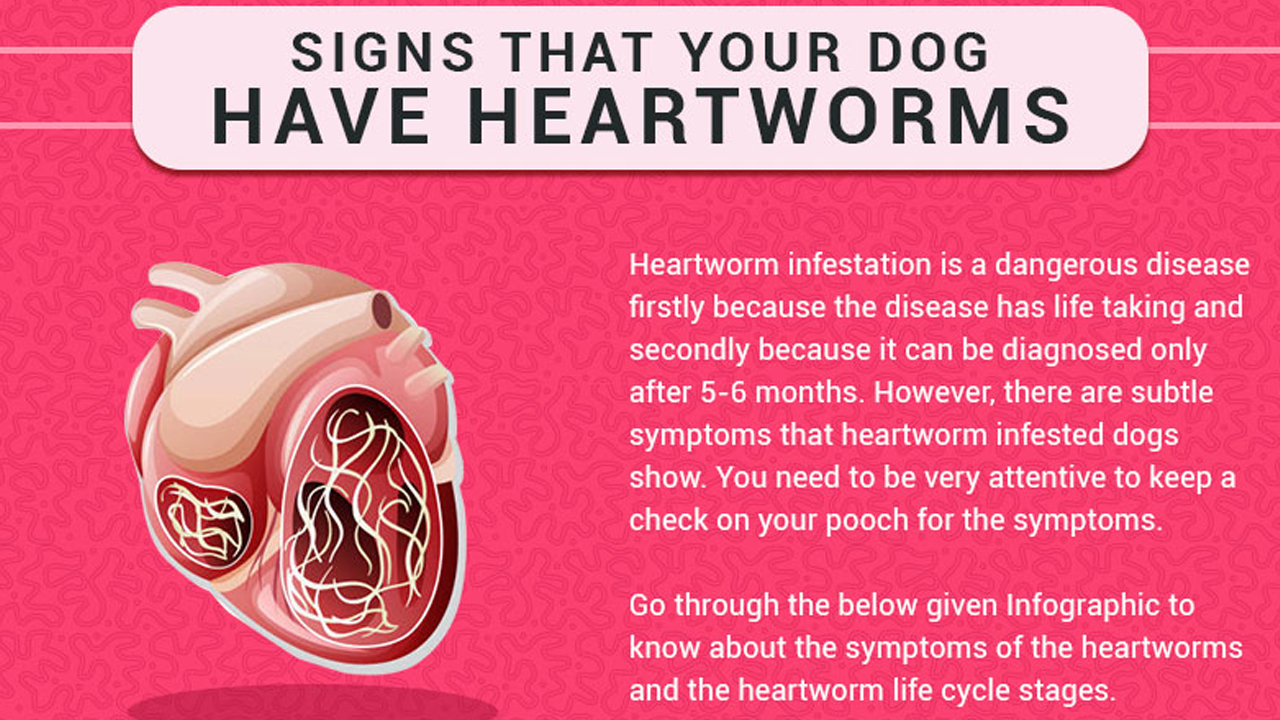
How to rid dogs of heartworms. In one treatment adult heartworms are killed, and in another, the microfilaria, or baby heartworms, are killed. These minimize toxicity from the medications and dying heartworms. (and, the newer medication, diroban.) two regimens are described in the drug manufacturer’s package insert accompanying each box of immiticide.
These minimize toxicity from the medications and dying heartworms. The only way for a dog to become infected with heartworms is through a bite from an infected mosquito. Melarsomine kills the adult heartworms in the heart and adjacent vessels.
This drug is administered in a series of injections. The dog may need to be monitored in the hospital after the initial dose of heartworm preventive is given. Several medicines to kill mosquitoes were given to adult heartworms that are injected with melarsomine brand name immiticide.
The drug melarsomine is what will kill heartworms in dogs. Your vet will inject the dog with immiticide three times over the course of. By spraying a mixture of geranium and lemongrass essential oils on your dog before you take it outdoors, you can go a.
Can you treat a dog for heartworms at home? The trade names of the two commonly used medications are immiticide and diroban. The vet will probably want to inject your dog with a heartworm treatment to kill the worms.
This drug will continue throughout treatment. Giving doxycycline to heartworm positive dogs can minimize problems. It is also uncomfortable for the dog, has significant side effects, and requires prolonged activity restriction.
Having said that, there are a number of things you can do to reduce the chances of your dog developing heartworm infection, or to minimize side effects from conventional treatment. A great way to prevent heartworms, which can only be passed on to your dog via mosquitoes, is to keep mosquitoes from biting your dog. Dogs being treated with this method also have restricted exercise for the duration of the treatment.
This is often given in the clinic in case of a reaction. Eliminate areas of standing water where mosquitoes can breed. Heartworm treatment is undoubtedly expensive.
Feed a high quality diet including raw meat and bones. The problem is, in the meantime, all of those heartworms are doing permanent damage to the heart and blood vessels. An injectable drug, melarsomine (brand name immiticide®), is given to kill adult heartworms.
The cost of heartworm prevention is low when compared to the cost of having to treat your dog for heartworms. Once the infected mosquito bites your dog’s skin, the immature heartworms will make their way into the dog’s bloodstream. They can be controlled naturally with citrus oils, cedar oils, and diatomaceous earth.
Hospitalize the dog for the day and give a heartworm preventative to kill juvenile heartworms in the bloodstream. A vet may prescribe some other drugs depending on the condition. The truth is that heartworm disease is a very serious disease that is better prevented than treated.
How do i get rid of my dogs heartworms? Treating for heartworm means killing the worms in the dog’s heart. Several injection methods are employed to administer this drug.
How do you get rid of heartworms in a dog without going to the vet? April is heartworm awareness month, but as long as there are mosquitoes around, it’s a disease to be mindful of all year long. Studies have shown that if you use ivermectin, the common preventative, on a monthly basis in a dog with heartworm disease, after about two years you’ll kill off most of the dog’s young heartworms.
Melarsomine, doxycycline, and prednisone are some of the common medications for killing heartworm in dogs. Your dog might need to be stabilized and given pain medications. While your dog may feel poorly because of the adult worms dying inside the blood vessels, the medication is effective at killing heartworms within 1 to 3 months.
Dogs needing conventional treatment may benefit from herbs such as milk thistle and homeopathics such as berberis; Over 30 species of mosquito can carry heartworms, so heartworm infection is a prevalent threat around the world. The vet gives this drug in a series of deep intramuscular injections, and it’s very effective against adult heartworms.
This drug will continue throughout treatment. Dogs needing conventional treatment may benefit from herbs such as milk thistle and homeopathics such as berberis; Surgery becomes necessary in case your dog is severely affected by heartworm.
If your dog is diagnosed with heartworm disease, it's not the end of the world. First they’ll start your dog on regular monthly “preventive” meds to kill immature heartworms and prevent new infections. Some dogs may take up to a year or more to be fully rid of adult heartworms!
Heartworm treatment is a fairly involved and lengthy process and so it is best to give your dog a monthly preventative like trifexis to avoid them getting heartworm. As a result, melarsomine kills the heart and vessel roots associated with the adult heartworm. Traditional “fast kill” heartworm treatment which, by the way, is not particularly fast, involves the use of immiticide.
Give the first injection of melarsomine to kill adult heartworms. The traditional treatments for heartworm in dogs include medications, surgery or restriction on exercise. Alive or dead, heartworm causes problems in our dogs.
Drugs are available to cure your animal. Continue to give heartworm preventatives monthly at home.
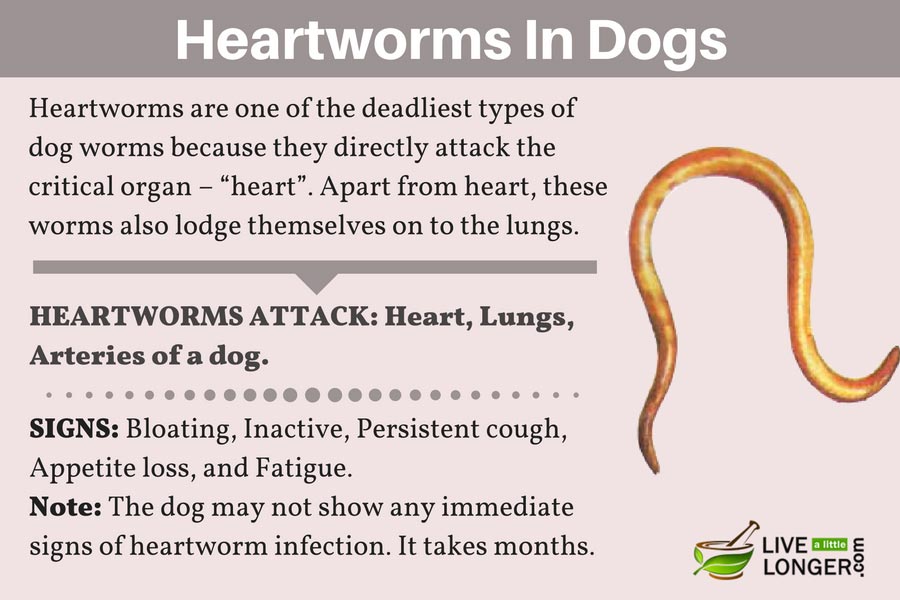
heart Dog Heartworms In Poop

How Dogs Get Heartworms Advanced Termite and Pest Control

Heartworm Disease Quepolandia
Heartworm Myths Debunked! Pet Sitting and Dog Walking in
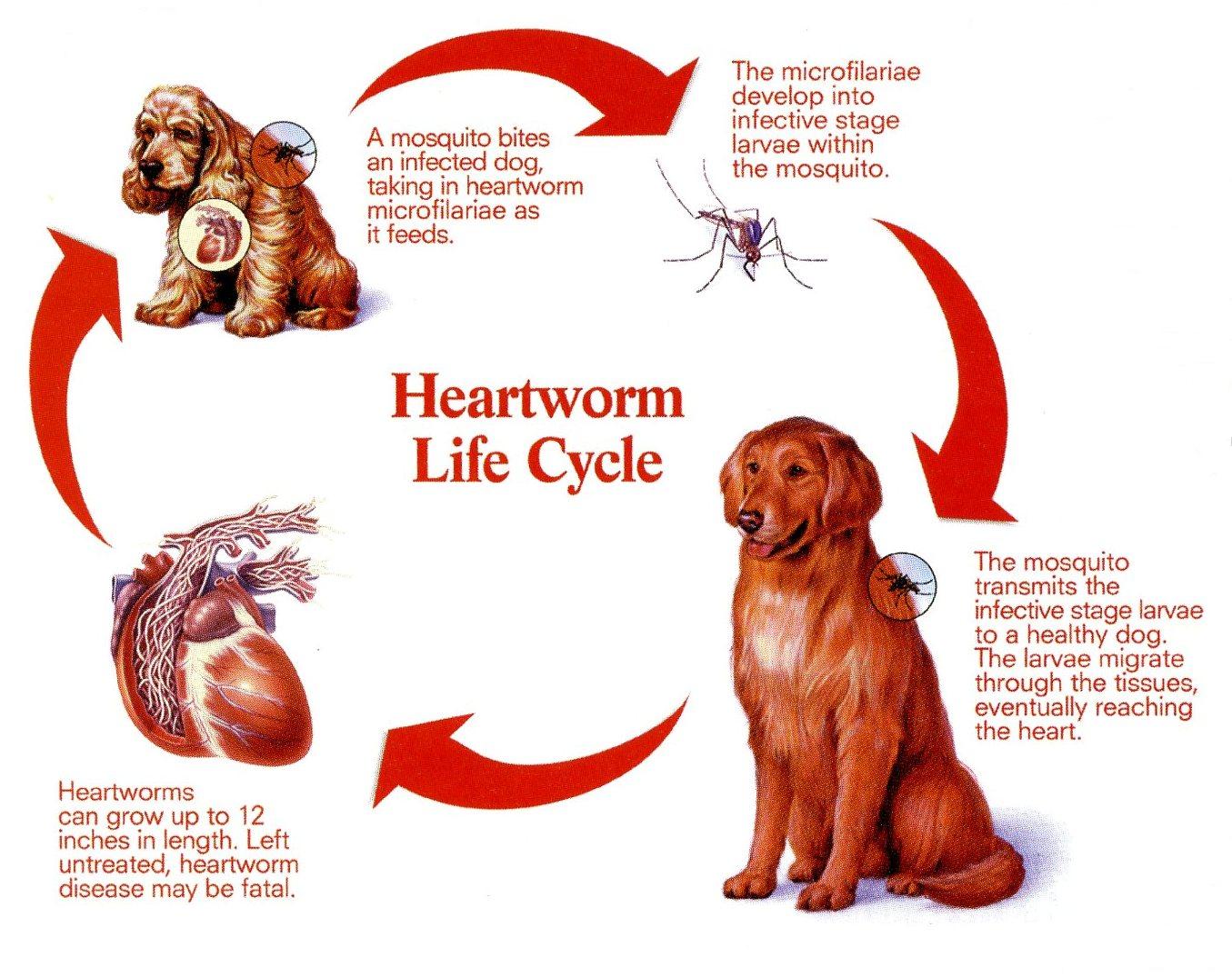
Dog Heartworms