It is primarily a disease of dogs and has several different forms and causes. Vet bills can sneak up on you.
My dog has black spots forming on his skin. At first, they

Mild darkening of the skin due to exposure to the sun and elements can always occur.

Dog skin darkening. Symptoms of dog black skin disease include severe hair loss and darkening of the skin (hyperpigmentation). Hyperpigmentation is when your dog’s skin begins to darken and thicken in areas. Although rare, a dog can develop a darkening color under its leg creases.
Always see the vet even if you think your dog's darkening skin is due to licking, to be sure he isn't suffering from another problem and to get something that will discourage the licking. Your dog may or may not itch, but chronic itching of the darkened skin may be caused by the secondary infection. This may be a normal process or may be due to a serious disease.
If the skin or coat has a color other than white, it is said to be pigmented. If the fur in the area is light, it will often turn brown or dark red from the licking, and the skin can darken and thicken over time. Most cases of skin darkening in a dog are secondary to other skin conditions or metabolic problems such as allergy infection or endocrine disorders.
While licking is often an indication of an allergic reaction or other skin condition, your dog may just lick when he's nervous or for seemingly no reason at all. Canine black skin disease is suspected to be an inherited disorder, but that is not known for certain. If its her skin she may have an allergy.
Symptoms of black skin disease in dogs. Most cases of skin darkening in a dog are secondary to other skin conditions or metabolic problems such as allergy, infection or endocrine disorders. Hyperpigmentation is a darkening and thickening of the skin seen in dogs.
My chihuahuas skin has been turning a purpleblack color since sunday. Change in pigment can occur due to a number of reasons, and if darker skin pigment accumulates on the skin, this will cause darkening of the skin. The skin and coat of a dog may sometimes change color, becoming lighter or darker.
The term hyperpigmentation indicates skin darkening or increased concentration of pigment on a certain skin area. It is, therefore, only a cosmetic concern as opposed to a health concern. When this dark pigment is laid down in the skin it has a special name, which is ‘melanoderma.’ when this dark pigment is laid down in the skin it has a special name, which is ‘melanoderma.’
There is no cure for primary hyperpigmentation, only symptomatic treatment and. It goes without saying that hyperpigmentation is more dramatic and intense in dogs with lighter skin and fur. Hyperpigmentation is a darkening and thickening of the skin seen in dogs.
If the skin is a darker color than normal, it is said to be hyperpigmented; Hyperpigmentation is a term used for increase in the pigmentation on dog skin, which is considered to be more than what is normal for that particular dog. In most cases, hyperpigmentation will result from a problem the dog has had and is, therefore, a secondary symptom.
Hyperpigmentation is not a disease in and of itself, rather it is a reaction to something else going on with the skin. Your dog’s skin turning dark can be considered normal when your dog ages. Our 6 year old boxer gets dry, darkening skin with black spots that eventually fall out with hair each winter.
the color change is typically caused by inflammatory cells known as macrophages which tend to release melanin, causing the dog's skin to turn black, explains veterinarian dr. The condition is usually just on his sides and seemed to go away with fish oil pills and warmer weather, but this year it seems worse. The disease can be divided into a primary form that is a genetic condition found mainly in dachshunds, and a secondary form that has several causes and can be found in any breed or age of dog.
Get the pawfect insurance plan for your pup. Below we discuss its causes of dog skin. Secondary hyperpigmentation is relatively common and can occur in any breed of dog, most commonly those breeds prone to obesity, hormonal abnormalities, allergies, contact.
This is particularly true in pups with light or white coats. Darkening of the skin particularly in the abdominal, groin and anal region is usually associated with repeated irritation of the skin in those areas. If it is lighter than its.
Hyperpigmentation is when the skin starts to saturate with color, becoming deeper and darker in hue. It can be a difficult disorder to diagnose and treat. Dog skin darkening is due to increased production of the pigment, melanin.
When a dog gets older, their skin will become darker. It is not a specific disease but a reaction of a dog's body to certain conditions. The darkening may spread throughout the body, eventually affecting the genitalia.
This irritation can be due to repeated contact or may be due to an allergic condition. While not a disease in itself, the darkening of the skin in dogs can point towards some health or skin condition. Some pigmentation of the skin may occur naturally with age, especially in certain breeds (and your dog certainly has a lot of them!).
However, this is something can happen naturally over time. The medical term for darkening of a dog's skin is hyperpigmentation. It won't necessarily change color, but if your dog has a pink belly then you will likely see it become darker when they age.
The cause is usually a reaction to the season, obsessive scratching and biting, or to the sun. Skin darkening may indicate an inflammatory process. Acanthosis nigricans is a condition in which there is abnormal darkening of the skin.
Darkened skin color can be a reaction to a change in season and allergies, but it can also be a problem. A dog that consistently licks at a certain area of her skin might experience darkening of the pigment there. Breeds most susceptible to hyperpigmentation include:
Skin discoloration doesn’t happen overnight — there has to be some degree of continual trauma or exposure for hyperpigmentation on a dog’s stomach or anywhere else to result.
There is a hard, small black spot on my dog’s leg. What is
Black Spots On Dog S Belly And Chest Ask A Vet
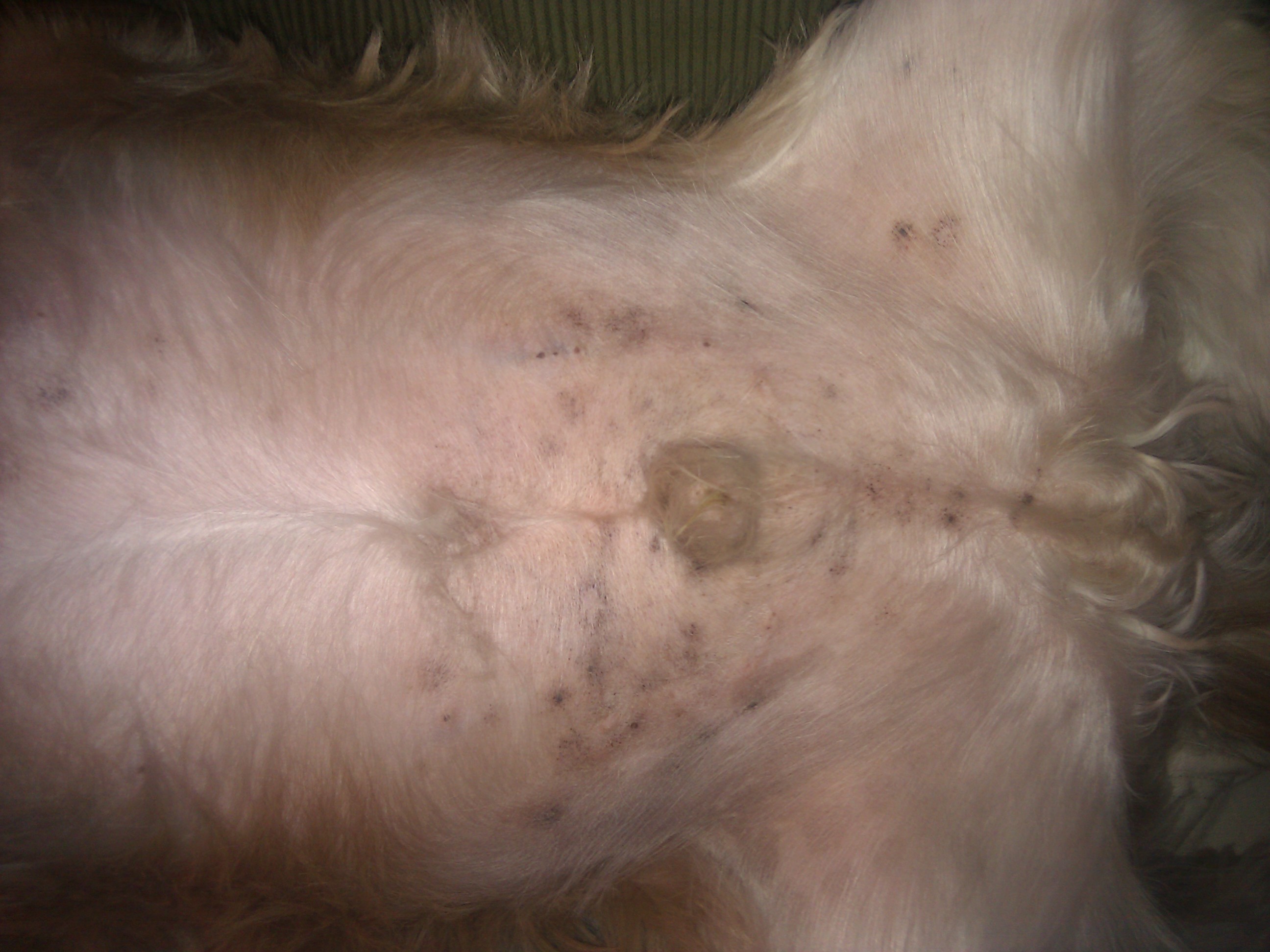
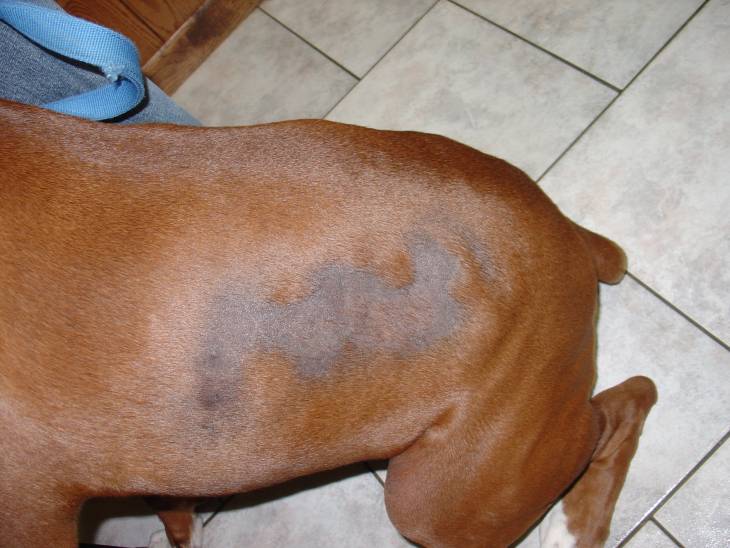
What Black Spots on Dog Skin Means (Should You Worry
Black skin on my dog's vulva. She's a ten year old

Black Spots on Dog's Skin, Belly and Gums Causes