Early on, the rectum appears healthy and pink. In cattle, it may be associated with coccidiosis, rabies, or vaginal or uterine prolapse;
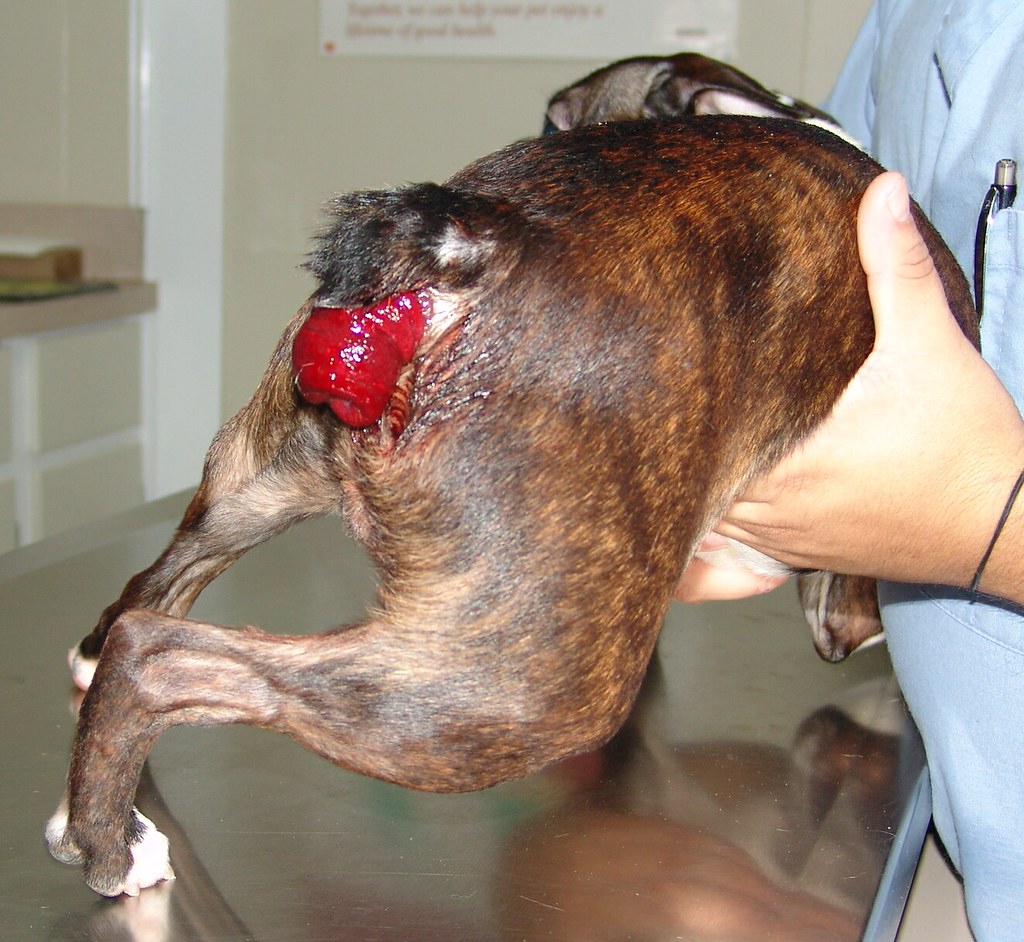
Twitter's prolapsed rectum before the vet operated Flickr
There’s little mistaking a rectal prolapse in a dogs or cat because it looks like a long, pink sausage or pink donut hanging out of the patient’s backside.

Rectal prolapse in dogs. If your dog suffers from a rectal prolapse, it is very important that you take him to the vet as soon as possible to treat this condition accordingly. Rectal prolapse in dogs is a condition in which rectal tissue protrudes through the anus. Repeated reduction and anal purse string sutures and subsequent incisional colopexy failed to prevent recurrent rectal prolapse.
Rectal prolapse in dogs and cats occurs when the animal’s rectum (the last part of the digestive tract, where feces sits before it’s launched onto an unsuspecting world) pops out of the anus. Digital rectal examination following reduction of the. Usually this happens when dogs strain to defecate, urinate, or give birth.
As time goes by, and circulation becomes endangered, the colour turns to hues of purple and black. Intestinal parasites can also lead to a rectal prolapse due to the irritation and diarrhea they may cause, along with the straining that results from passing some of the long worms. Rectal prolapse in dogs happens when the inner layers of the rectum push out and protrude from the anus.
Symptoms of rectal prolapse in dogs. Rectal prolapse is probably the most common gi problem in pigs due to diarrhea or weakness of the rectal support tissue within the pelvis. A rectal prolapse is when part of the rectum (large intestine) comes out of the bottom.
Rectal prolapse in dogs occurs more commonly when a dog is giving birth or straining to defecate and is visible to the naked eye. The vet may provide an anesthetic such as an epidural to relieve discomfort. In a complete prolapse, the intestinal tissue stays outside of the body.
It's usually caused when your dog repeatedly strains while pooping Rectal prolapse causes a fleshy, tubular mass to protrude from the rectal orifice in dogs. Though this condition can occur in both males and females, the female is put more at risk during the birthing process.
Persistent straining due to urogenital or alimentary disease, most commonly severe colitis/proctitis associated with endoparasites. The rectal tissues turn inside out and appear as a cylinder or tube of pink tissue sticking out of the dog's anus. The dog may also strain to produce a bowel movement and may also show signs of.
Causes of rectal prolapse in dogs your vet will surely recommend a fecal exam on a poop sample to. The anus produces a pink or red cylindrical lump. Causes of rectal prolapse in dogs straining can occur because of diarrhea, constipation, or in an attempt to pass a foreign object.
Prolapse may be classified as incomplete (only the innermost rectal layer is protruding) or complete (all rectal layers are protruding). What occurs is that the rectum, which is the last part of the large intestine, unexpectedly sticks out through the anus of a dog (or scarcely a cat). The prolapsed rectum may extend two to several inches from the body.
Rectal prolapse in dogs occurs when part of your dog's rectum protrudes through his anal opening. Rectal prolapse is a condition in which the last part of a dog's intestinal tract—the rectum—protrudes from the anal opening. Rectal prolapse in dogs most commonly occurs when one puts too much pressure and strain on the anus.
Diagnosing rectal prolapse in dogs. Urolithiasis) that causes tenesmus can result in rectal prolapse. The condition commonly occurs in young dogs that have severe diarrhea or that routinely strain to defecate.
To know when your dog has a prolapse, watch out for the following signs: What causes a prolapse in dogs? Prolapse is protrusion of a portion of the rectum or rectal mucosa through the anus, usually caused by an underlying disorder.
It is critical to find and treat the cause of the prolapse to manage it appropriately, so various tests will need to be performed. Rectal prolapse in dogs can occur at any age and can be congenital or develop later in life. Rectal prolapse is an issue that can affect any age or breed of dog.
Occasionally, excessive “riding” and associated traumatic injury may be causative in young bulls. A rectal prolapse looks like a red tube under the tail and is most common if a dog has been straining very hard to poo. Rectal prolapses are an emergency but are fortunately, quite rare.
To learn more about the causes, symptoms, and treatment of rectal prolapse in dogs, read on. Eversion of one or more layers of rectum through the anus. Just about any gastrointestinal (enteritis enteritis:
If your pet has a rectal prolapse, you may have noticed that recently he's been spending a lot of time trying to poop Treatments for rectal prolapse in dogs if the rectal tissue isn’t too badly damaged, the veterinarian will likely attempt to manually push the rectum back into place and put a suture around the anus, which will stay in for about 48 hours. Diagnosing rectal prolapse in dogs dogs with a rectal prolapse should be examined as soon as possible at your family vet or the closest emergency clinic.
When rectal prolapse occurs, it can look as if your dog has a tube of flesh attached to his anus. If your dog is suffering from a rectal prolapse, it’s very important that you take it to the veterinarian as soon. The rectum is actually a part of the lower intestine, that normally remains inside your dog, just behind the anus.
Eosinophilic) or urogenital condition (dystocia, urethral calculus ureter: Scooting around the back end; Bleeding at the back end;

HOPE Dog Rescue Saved From A Makeshift Shed (Kimmy)

Rectum prolapse surgical management technique in dogs

Small prolapse anus, It was constipated, 6 week old puppy

drssnairvet INTUSSUSCEPTION AND RECTAL PROLAPSE IN
Rectum prolapse pursestring suture illustration dogs